Aviation Week - Aerospace Defense, Business & Commercial News

Showing posts with label Indian Air Force. Show all posts

Saturday, June 13, 2015

Combat Platforms of the Indian Air Force


Indian Air force is the among the top five largest air powers in the world based on it’s inventory, personnel and it’s training. With reference to it’s immediate environment it’s sandwiched between Pakistani air force and PLAAF, where it outnumbers PAF and in turn is outnumbered by the PLAAF. Traditionally IAF has relied on a healthy balance between low cost platforms like Mig 21’s to build numerical superiority and the more expensive platforms like Su30MKI, Mig 29 and Mirage 2000 to cover the higher end spectrum of quality fighters, and everything in the middle is covered by medium cost/ medium technology platforms like the Jaguar and Mig 27’s.

With India’s economic fortunes taking an upward swing in the mid 90’s, IAF has added some serious muscle with upgrades to Mirage 2000 and Mig 29’s, drastically increasing the numbers of it’s premier heavy combat aircraft Su 30MKI and adding some serious teeth by choosing Dassualt Rafale recently for its multi role medium combat role aircraft.

Su 30MKI Flanker:

Indian air force classifies Su 30 MKI as its premier Air Dominance fighter, which can be used in strike, air superiority, maritime strike as well as mini awacs platform. Su30’s slow speed sorcery can sometimes make us forget that it is also an excellent supersonic platform with one of the best BVR systems in world. With the Super Sukhoi upgrade program, additional features like RCS reduction, better engine performance, longer range R77 RVV SD and MD missiles, and integration of Brahmos supersonic cruise missile will increase the capability of the MKI to a level which would be difficult for other platforms to match.

Mig 29 SMT - BAAZ:
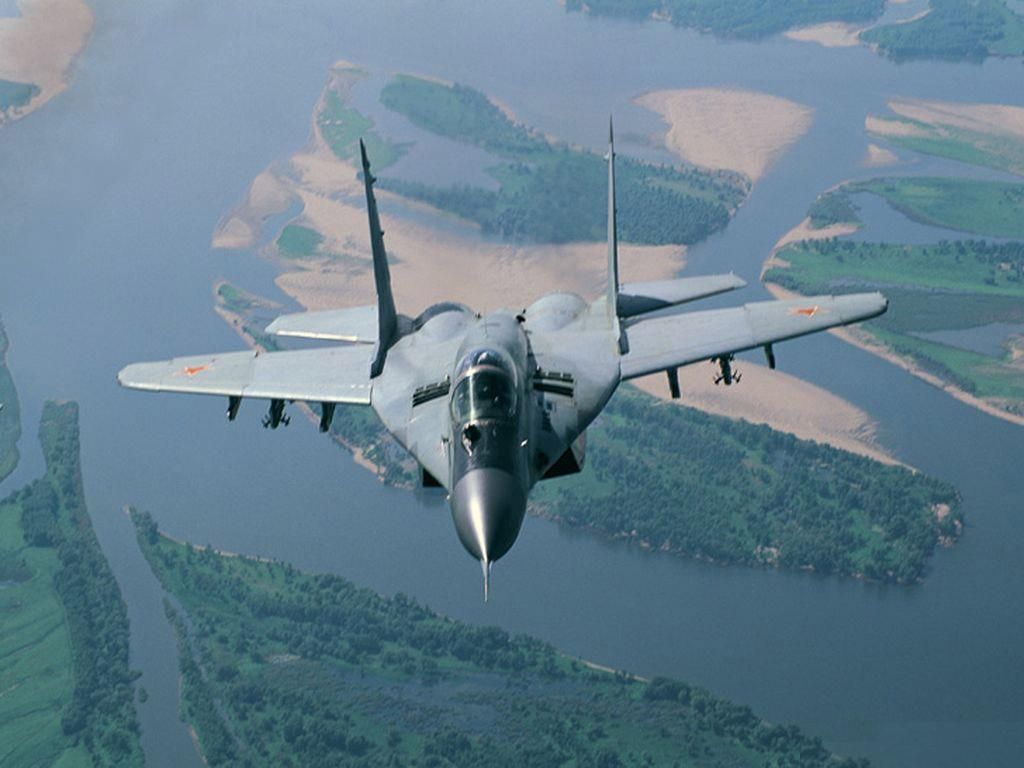

Mig 29 remains the go to air superiority fighter for IAF. The most capable fighter pilots of IAF are handpicked for this fighter program, and it’s primary role is to shoot down enemy aircrafts period. India was the first foreign customer for the Mig 29M’s outside USSR, and hence is closest to the most original specification. With the upgrade program, Mig 29M will get all the SMT upgrade features with a few additional features borrowed from the Mig 29K program of the Indian Navy and the Mig 35 pitch for the MMRCA, one of the visible difference is the enlarged spine for additional avionics and additional fuel, from the mig 35 proposal, better radar package with the Phazatron Zhuk ME providing substantial capability of delivering ground ordinance like A2G missiles and PGM capabilities evident from the push to integrate the Israeli Litenning pod. Mig 29 although with added dimension of multi role will continue to serve as the primary air superiority fighter with the option of strike features if the need arises.

Mirage 2000I - 2005 Mk2: 


Mirage 2000 was the first true multi-role aircraft for IAF with equal prowess in strike, air superiority and reconnaissance roles. It’s user friendly and low maintenance features have been highly prized by the IAF. The ease with which it was mated to paveway LGB’s during kargil operations proved it’s potential as an exceptionally potent platform with room for upgrades. IAF has decided to uprate it mirages with the 2005 mk2 upgrades from dassualt at an astounding price which is almost equal to price of the original aircraft. The unmatched performance of mirage initially led to feasibility analysis to procure additional multirole aircrafts to replace the aging mig 21’s, which eventually transformed into the MMRCA contract. Mirage 2000 with its 2005 mk2 upgrade will get better avionics, radar and the possibility to integrate the meteor bvr and the storm shadow alcm making this one of the most potent platforms for the IAF.

LCA Tejas Mk1/ Mk2:


LCA has almost been the problem child of the IAF with it’s lengthy developmental process. Although the aircraft has drawn flak due to it’s timeline for development and induction, the design philosophy of the aircraft has great potential. Envisaged as a pilot friendly, low maintenance, agile dogfighter, it’s role was broadened to a multi role light fighter. With the problems with kaveri gtrx engine, an uprated FG404 and later FG414-IN was selected to provide the aircraft with almost 100KN of thrust, which would put it’s twr among the best aircrafts in the world. It’s avionics architecture lets it employ the range of Russian, Indian and Israeli missiles and pgm’s. Along with that it shares wide commonality with the naval version. The ultimate aim of IAF is to induct the home grown fighter in large numbers to replace the mig 21 and the  mig 27’s and eventually take over all of the close air patrol, area defence and close air support roles essentially freeing up the Su30MKI’s Rafales, Mig 29’s and Mirages for their actual intended strike and air superiority roles. Success of LCA mk2 will essentially define the IAF’sfuture doctrine along with the constituents of its strike packages for various objectives. Another spinoff intended from the LCA Mk1 might be a lead in fighter trainer for the IAF augmenting the advanced jet trainers of the IAF.

SEPECAT Jaguar Shamsher: 

Jaguar in the IAF takes up the role of deep penetration and maritime strike aircraft. IAF has decide to upgrade the adour engines with up- Honeywell F-125IN turbofan engine to provide additional payload capacity to this aircraft. With impressive payload capacity and armed with matra magic II, sea eagle and As 37 Martel  missiles, jaguar is the dark horse in the IAF arsenal. The DARIN II upgrade from DRDO provides the aircraft with better defensive capabilities, and net centric capabilities.

Mig 27M - Bahadur


Although this aircraft is due for replacement, due to shortage of newer aircrafts and to maintain the squadron strength IAF decided to upgrade the Mig27M to DARE III standards. Mig 27 with its impressive payload capacity was primarily tasked with low level ground attack to provide CAS support to troops. With the experience of kargil war, it was evident that such missions posed higher risk and the susceptibility to ground fire. DARE III upgrades have provided the ability to loiter at high altitude and hit it’s targets from high altitudes using Precision guided munitions and stand off missiles utilizing the litening III targeting pod. Apart from that the pilot work load has been significantly reduced by the avionics upgrade package and also provides better situational awareness to the pilots.


Future platforms of IAF:


Sukhoi PakFA/HAL PMF FGFA:

Hindustan Aeronautics Ltd and RAC Russia have partnered together to build the Prospective Multirole Fighter (PMF) fifth generation fighter aircraft (FGFFA) to lead both RuAF and IAF in the next generation. PAKFA is the broadly the single seat fighter variant and the FGFA would be the dual seat version, RuAF will heavily bank on the single seat variant with the exact opposite with the IAF. PAKFA T50 boasts of hyper maneuverability, thrust vectoring, stealth, AESA radar systems, internal weapons bay, RVV SD and MD BVR systems, sensor fusion and supersonic cruise speeds.


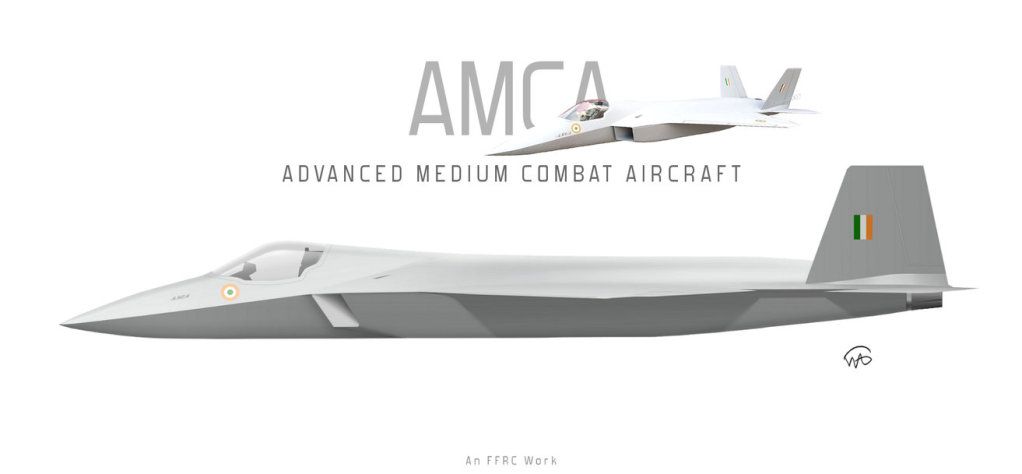
AMCA: Advanced medium combat
Advanced medium combat aircraft is the indigenous fifth generation stealth aircraft under development by the DRDO/ADA of India. AMCA will replace the mirage 2000 and jaguar platforms in the future. AMCA will boast hyper maneuverability, low RCS observable stealth features, internal weapons bay, Long range BVR and AESA radar and 5th gen sensor fusion. Most likely the system will be developed as a carrier based aircraft and and adapted to a land based system.

Rafale:


The dassault rafale will form the main omni role strike force along with the Su30 MKI platforms to provide significant offensive capabilities for the IAF. Almost 2 squadrons will be procured from Dassault, France with further options to produce the more units in India. It remains to be seen if the navy opts for the naval rafale for its IAC 2 and IAC 3 platforms. As learnt from the MKI program, if Rafale does delivers what it is expected from it, it might well see a significant increase in production orders from the IAF well beyond 200 units.


R60M (AA-8 Aphid)


Type: IR-guided Within-Visual Range air-to-air missile

Designer: NPO Molniya (now under Vympel JSC)


Deployed: India, China, Bangladesh, Myanmar,

Range: 8 km

Propulsion: solid-fuel rocket engine

Platform: MiG-29, MiG-21, MiG-23 (former), Tejas LCA, F7, F7BG, J8, JH7, 

Brahmos


Brahmos is the world's fastest cruise missile in operation.The missile travels at speeds of Mach 2.8 to 3.0.The land launched and ship launched versions are already in service with air launched and submarine launched versions currently under testing phase. An Air launched variant of Brahmos is planned which is expected to come out in 2012 and will make India the only country with supersonic cruise missiles in their army, navy, and air force.A hypersonic version of the missile is also presently under development with speed of Mach 7 to boost aerial fast strike capability. It is expected to be ready for testing by 2017.

Variants: Brahmos BlkI, Brahmos BlkII, Brahmos Blk III, Brahmos 2 hypersonic (under development), Brahmos 3 (Underdevelopment- lighter version) 

Type: Stealth supersonic Land Attack/Anti-Ship cruise missile


Deployed: India

Designer: NPO Mashinostroyenia/DRDO 

Range: 290 Km Sea Skimming, 500 Km High Trajectory

Engine: Two-stage integrated Rocket/Ramjet

Platform: Il-38, Tupolev Tu-142, Super SU 30MKI, Kilo Class Submarine, Talwar class frigate, Shivalik class frigate, Godavari class frigates, Brahmaputra class frigates, Rajput class destroyers, Kolkata Class Destroyers, Delhi class destroyer, Mig29K (Brahmos 3), Rafale (Brahmos 3), Mig29 UPG (Brahmos 3).

KH35 (AS-20 'Kayak)


The Kh-35 missile is a subsonic weapon featuring a normal aerodynamic configuration with cruciform wings and fins and a semi-submerged air duct intake. The propulsion unit is a turbofan engine.The missile is guided to its target at the final leg of the trajectory by commands fed from the active radar homing head and the radio altimeter.
Target designation data can be introduced into the missile from the launch aircraft or external sources. Flight mission data is inserted into the missile control system after input of target coordinates. An inertial system controls the missile in flight, stabilizes it at an assigned altitude and brings it to a target location area. At a certain target range, the homing head is switched on to search for, lock on and track the target. The inertial control system then turns the missile toward the target and changes its flight altitude to an extremely low one. At this altitude, the missile continues the process of homing by the data fed from the homing head and the inertial control system until a hit is obtained.
A new radar seeker, Gran-KE have been developed by SPE Radar MMS and will be replacing the existing ARGS-35E X band seeker.
It is also nicknamed Harpoonski for its similarity to the AGM-84 Boeing Harpoon. It is designed to attack vessels up to 5000 tonnes.


Type: Subsonic anti-ship missile/ Air to Surface Missile

Deployed: India

Designer: Zvezda MKB

Range: 120 km

Engine: Turbofan

Platform: SU 30 MKI, Mig 29UPG, Mig 29K, Mig 27, LCA Tejas, Kora class corvette, Brahmaputra class frigate, Delhi class destroyer, Rajput class destroyer.

P-270 Moskit, SS-N-22 Sunburn


The exact classification of the missile is unknown, with varying types reported. This uncertainty is due to the secrecy surrounding an active military weapon. The Moskit is one of the missiles known by the NATO codename SS-N-22 Sunburn. It reaches a speed of Mach 3 at high altitude and Mach 2.2 at low-altitude. This speed is triple the speed of the subsonic American Harpoon. When slower missiles, like the Harpoon or the French Exocet are used, the maximum theoretical response time for the defending ship is 120 to 150 seconds. This long response time provides time to launch countermeasures and employ jamming before deploying "hard" defense tactics such as launching missiles and using quick-firing artillery. But the high speed of the 3M82 "Mosquito" missiles reduce the maximum theoretical response time for the defending ship to 25 to 30 seconds. This short response time makes jamming and countermeasures very difficult, and firing missiles and quick-firing artillery even more difficult.

Variants: 3M80M

Type: Anti-ship missile, Anti-submarine missile, Land attack cruise missile

Deployed: China, India

Designer: Raduga MKB

Range: 300 KM

Engine: Four ramjets (solid fuel rocket on air-to-surface version)

Platform: Veer class corvette, Kora Class corvette,Su 27, Su30mkk, SU30 MKI, J11, J15,

Derby Missile


Also known as the Alto, the Derby missile is a BVR, medium-range (~50 km) active radar homing missile. Though technically not part of the "Python" family, the missile is basically an enlarged Python-4 with an active-radar seeker.

Type: Medium range Air to Air missile

Designer: Rafael Advanced Defense Systems

Deployed: India

Range: 50-60 Kms

Engine: Solid-fuel rocket motor.

Platform: Dassault Mirage 2000-2005 Mk 2, Dassault Rafale, LCA Tejas, Sea Harrier FRS Mk.51, Mig 29UPG, SU30MKI

Python IV Missile


The Python-4 fourth generation A/A missile, in operational use in the Israeli Air Force , features a novel "no escape volume" performance with a unique aerodynamic configuration for superior agility. The state-of-the-art, high performance seeker incorporates an advanced IRCM & background rejection capabilities. The missile includes a highly effective fragmentation warhead. Python 4 is a very nimble "fire and forget" missile with an improved maneuvering capability. It has an advanced homing head with a lateral "squint" capability which allows it to receive signals from the line of vision of the pilot who sees the enemy plane through a special (Elbit-developed) helmet. The missile receives these signals and hits the enemy plane without requiring the pilot to steer his aircraft at the enemy plane. The Python 4 can be launched at a range of over 15 km, its warhead is over 11 kg, and its electromagnetic proximity fuze is one of the best in the world.

Type: Short range Air to Air missile

Designer: Rafael Advanced Defense Systems

Deployed: India

Range: 20 Kms

Engine: Solid-fuel rocket motor.

Platform: Dassault Mirage 2000-2005 Mk 2, Dassault Rafale, LCA tejas, Sea Harrier FRS Mk.51, Mig 29UPG, SU30MKI

KH 59 ME (KINGBOLT)


The Kh-59ME has an external turbofan engine below the body just forward of the rear wings, but retains the powder-fuel accelerator. It also has a dual guidance system consisting of an inertial guidance system to guide it into the target area and a television system to guide it to the target itself.The 36MT turbofan engine developed for the Kh-59M class of missiles is manufactured by NPO Saturn of Russia.

Target coordinates are fed into the missile before launch, and the initial flight phase is conducted under inertial guidance. At a distance of 10 km from the target the television guidance system is activated. An operator aboard the aircraft visually identifies the target and locks the missile onto it.


Type: air-to-surface missile, anti-shipping missile


Deployed: India, China

Designer: Raduga OKB

Range: 115 Km To 200 Km

Engine: Rocket then turbofan

Platform: SU 30 MKI, SU 27, J11, Mig 29, Mig 27

KH 59 MK/M2

Type: active radar homing anti-ship mis,sile

Designer: Raduga OKB

Range: 285 Km

Engine: Rocket then turbofan

Platform: SU 30 MKI, Mig 29UPG, Mig 29K, Mig 27, LCA Tejas

Matra Super 530


Variants: Matra Super 530D.

Type: Medium Range Air-to-Air Missile

Designer: Mécanique Aviation Traction (Matra)

Range: 35 Kms

Engine: Solid-fuel rocket motor.

Platform: Dassault Mirage 2000-2005 Mk 2, Dassault Rafale, Sea Harrier FRS Mk.51, LCA tejas

AS30L


Type: laser guided short-to-medium range air-to-ground missile
Deployed: India
Designer: Aérospatiale

Range: 11 Kms

Engine: two-stage solid propellant rocket motors, composite booster, double-based sustainer

Platform: SEPECAT Jaguar

R550 Matra Magic


Variants: Magic 2.

Type: Short Range Air-to-Air Missile

Deployed: India, Pakistan

Designer: Mécanique Aviation Traction (Matra) 

Range: 35 Kms

Engine: Solid-fuel rocket motor.

Platform: Dassault Mirage 2000-2005 Mk 2, Dassault Rafale, Mirage 3/5, Sea Harrier FRS Mk.51 .

Kh25 (AS-10 'Karen)


The Kh-25/Kh-25M is a family of Soviet lightweight air-to-ground missiles with a modular range of guidance systems and a range of 10 km. The anti-radar variant (Kh-25MP) is known to NATO as the AS-12 'Kegler' and has a range up to 40 km. Designed by Zvezda-Strela, the Kh-25 is derived from the laser-guided version of their Kh-23 (AS-7 'Kerry'). It has now been succeeded by the Kh-38 family, but the Kh-25 remains in widespread use.


Variants: KH25MP, KH25ML, KH25MA

Type: tactical air-to-surface missile / anti-radar missile

Deployed: India

Designer: Zvezda-Strela

Range: 10Kms

Engine: Fixed thrust solid fuel rocket

Platform: SU 30 MKI, Mig 29UPG, Mig 29K, Mig 27, Mig 21 bison,

R27 AA-10 Alamo


The R-27 is manufactured in infrared-homing (R-27T), semi-active-radar-homing (R-27R), and active-radar-homing (R-27AE) versions, in both Russia and the Ukraine. The R-27 missile is carried by the Mikoyan MiG-29 and Sukhoi Su-27 fighters, and some of the later-model MiG-23MLD fighters have also been adapted to carry it.

Variants: R27R, R27T, R27ET, R27EP, R27ER 

Type: Medium-Long Range Air-to-Air Missile

Deployed: India, Bangladesh

Designer: Vympel MKB

Range: 80-130Kms

Engine: Solid-fuel rocket motor.

Platform: SU 30 MKI, Mig 29UPG, Mig 29K, LCA Tejas, Mig 21 bison,

Kh-66/23 (AS-7 'Kerry')


Variants: KH23M, KH23L, Kh-66

Type: tactical air-to-surface missile / anti-radar missile

Deployed: India

Designer: Zvezda-Strela

Range: 10Kms

Engine: Fixed thrust solid fuel rocket

Platform: Mig 27, Mig 21 bison, 

AS.37 Martel


Type: Standoff anti-radar missile

Deployed: India

Designer: Hawker-Siddely, Matra

Range: 40 Kms

Engine: two stage solid propellant rocket motors

Platform: SEPECAT Jaguar, Sea Harrier

Sea Eagle


Type: Sea-skimming anti-ship missile

Designer: MBDA/BAe Dynamics

Deployed: India

Range: 130 Kms

Engine: Solid-fuel rocket motor.

Platform: Dassault Mirage 2000-2005 Mk 2, Dassault Rafale, Sea Harrier FRS Mk.51, Sea Harrier FRS Mk.51, Jaguar IM, Ilyushin Il-38, Tupolev Tu-142, Sea king Mk 42B

Friday, June 12, 2015

R73 (AA-11 Archer)


The R-73 is an infrared homing (heat-seeking) missile with a sensitive, cryogenic cooled seeker with a substantial "off-boresight" capability: the seeker can "see" targets up to 40° off the missile's centerline. It can be targeted by a helmet-mounted sight (HMS) allowing pilots to designate targets by looking at them. Minimum engagement range is about 300 meters, with maximum aerodynamic range of nearly 30 km (19 mi) at altitude. .

Variants: R73M1, R73M2, R73E,

Type: Short Range Air-to-Air Missile

Deployed: India, China, Bangladesh, Myanmar

Designer: Vympel MKB

Range: 30-50 Kms

Engine: Solid-fuel rocket motor.

Platform: SU 30 MKI, Mig 29UPG, Mig 29K, LCA Tejas, Mig 21 bison,

R77 AA-12 Adder


Variants: R77 RVV-AE, R77M1, R77M, R77P, R77MP, R77MT, RVV-SD (speculated), RVV-PD (speculated)

Deployed: India, China

Type: Medium-Range Air-to-Air Missile

Designer: Vympel MKB

Range: 60-120 Kms

Engine: Solid fuel rocket motor (R-77), air-breathing ramjet (R-77M1)

Platform: SU 30 MKI, Mig 29UPG, Mig 29K, Mig29 SMT, SU27, SU30MKK, J11, J15,  LCA Tejas, Mig 21 bison,

Kh-29 (AS-14 'Kedge)


It is comparable to the United States' AGM-65 Maverick missile but with a much heavier warhead. The Kh-29 is intended for primary use against larger battlefield targets and infrastructure such as industrial buildings, depots and bridges, but can also be used against ships up to 10,000 tonnes, hardened aircraft shelters and concrete runways.

Variants: KH29T, KH29L

Type: Air-to-surface missile

Deployed: India

Designer: Molniya/Vympel MKB

Range: 30Kms

Engine: Fixed thrust solid fuel rocket

Platform: SU 30 MKI, Mig 29UPG, Mig 29K, Mig 27, Mig 21 bison, Tu-142.

Kh-31 (AS-17 'Krypton')


It is a sea skimming cruise missile with a range of 110 kilometres (60 nmi; 70 mi) or more and capable of Mach 3.5, and was the first supersonic anti-ship missile that could be launched by tactical aircraft.
In many respects the Kh-31 is a miniaturised version of the P-270 Moskit (SS-N-22 'Sunburn') and was reportedly designed by the same man. The missile is conventionally shaped, with cruciform wings and control surfaces made from titanium. The two-stage propulsion is notable. On launch, a solid-fuel booster in the tail accelerates the missile to Mach 1.8 and the motor is discarded. Then four air intakes open up and as in the Franco-German ANS/ANF the empty rocket case becomes the combustion chamber of a kerosene-fuelled ramjet, which takes it beyond Mach 4.

Variants: KH31 P/A/L

Deployed: India
Type: Medium-range air-to-surface missile

Designer: Zvezda-Strela MKB, later Tactical Missiles Corporation

Range: 50 km sea skimming, 110 high alt

Engine: Solid fuel rocket in initial stage, ramjet for rest of trajectory

Platform: SU 30 MKI, Mig 29UPG, Mig 29K, Mig 27(KH31A),J11, SU27, SU30MKK, Mig 21 bison, Tu-142, LCA Tejas